

The Grass Fight

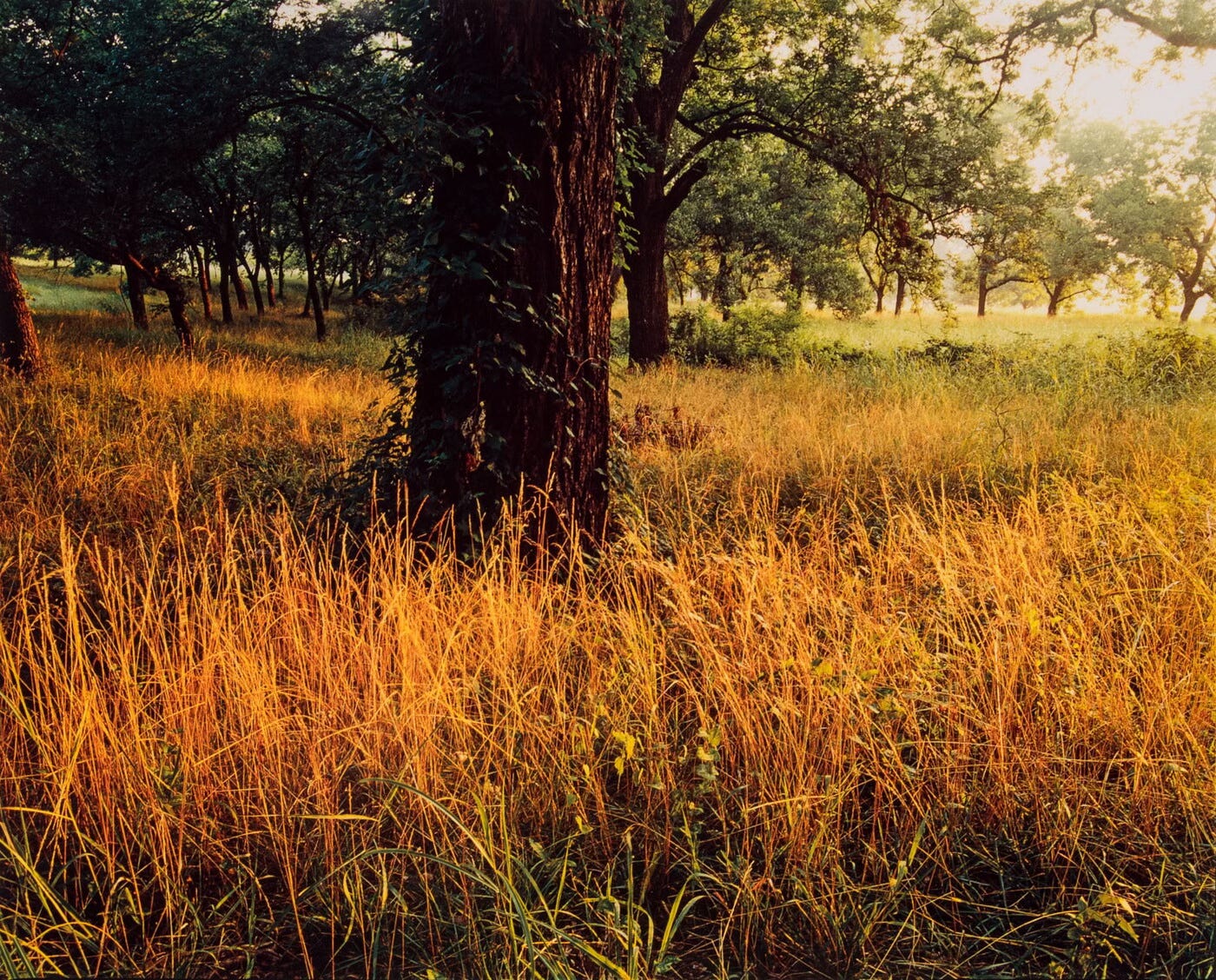
One of the least decisive but certainly most unusual battles of the Texas War for Independence.
Texas State Historical Marker
Three truths about war are inexplicable, and have always been from the beginning of war. First, war consists of hours of boredom punctuated by moments of terror. Second, every fighting force has to contend with its share of scuttlebutt—unfounded rumors. Third, soldiers do not get paid commiserate to the risks they take in combat.
All three were true for the men who fought in the Texas Revolution.
On October 2, 1835, Mexican troops under the command of Colonel Domingo de Ugartechea failed to capture the “Come and Take It” cannon at Gonzales. They were driven from the field and forced to withdraw to San Antonio de Béxar. In the aftermath, Texian forces mushroomed to three hundred, under the command of Stephen F. Austin. When Mexican forces were defeated on the outskirts of Béxar on October 28 at the battle of Concepción, the ragtag Texian army believed it could whip the whole Mexican army, beginning with General Martín Perfecto de Cos and his six hundred and fifty men who had fortified themselves among Bexar’s plazas and inside the Alamo. The Texians put the Mexicans under siege. By the beginning of November the Texian forces doubled to six hundred men. At months end, after Austin had assumed diplomatic duties in the United States and Edward Burleson had been selected commander, with the siege wearing on, the Texians came to experience the first truth of warfare: morale-grinding boredom.
The boredom was broken on November 26, bringing to the fore the second and third truths of warfare, along with the second part of the first truth. On that day, Texian scout Erastus “Deaf” Smith rode into camp in a swirl of dust, having spotted a Mexican column of more than one hundred men and forty pack animals proceeding up the old Presidio Road. Twelve days earlier, on the fourteenth, Colonel Ugartechea and one hundred dragoons had ridden out of Béxar to guide reinforcements to the Alamo. Smith believed this was Ugartechea’s relief column.
But what caught most of the Texians’ attention was the mule train. According to Creed Taylor, “all was excitement and activity.” Each tongue wagged in speculation as to what the mule train carried. The scuttlebutt was that Ugartechea was bringing in a load of silver to pay Mexican troops. The Texians, who had been fighting without pay, were filled with “visions of sudden acquired wealth,” in Taylor’s words, and were willing “to take any chance in attacking and appropriating the Mexican army chest.”
Burleson wasn’t so sure. If it was Ugartechea with reinforcements why would a large pack train be in the vanguard? Reserves were needed to protect the city and defend the Alamo, not to guard pecos. Burleson was faced with two problems. First, he had to investigate. Second, he had to keep his men in camp. He sent James Bowie with forty cavalrymen to reconnoiter with orders not to attack unless it was deemed advisable.
Bowie by nature was an aggressive and combative man. Burleson should have known Bowie wouldn’t just spy out a column of Mexican dragoons and muleskinners and send word back. This should have been even more apparent when Bowie selected twelve of the best marksmen and riders in the Texian camp. William H. Jack and one hundred men, watching Bowie and his scouting party ride from camp and fearing they would lose out on their share of the loot, bolted without orders, following hard on Bowie’s heels.
Bowie spotted the “treasure train” about a mile west of Béxar along Alazán Creek. True to his character, he charged the column. The Texians couldn’t bring their long rifles to bear on horseback, but with pistol and long knives they hacked and slashed into the Mexican outriders. The dragoons fell back into a dry creek bed well protected with a thicket of mesquite and set up a defensive position. General Cos, who had been awaiting the pack train, saw the unfolding skirmish from the town and ordered infantry out to support the dragoons.
With the arrival of Mexican infantry, Bowie realized he was outnumbered and outgunned. He ordered his men to dismount and take cover in a dry arroyo opposite the Mexican troops, not fifteen feet from the Mexican line. Mexican forces attacked the Texians three times, who could now bring their long rifles to bear with deadly effect. The Texians repulsed the Mexicans back “down in the hollow,” according to Robert Hancock Hunter,“which was about 10 to 12 feet deep.”
Around this time, Jack and the Texian infantrymen who refused to lose their share of the booty arrived amidst Mexican musket fire. Bowie and Jack devised a plan of assault. After an exchange of three volleys, the Texians would move in a double envelopment, attacking the Mexican flanks. The attack cleared the creek bed of Mexican troops, “except their dead and wounded,” sending them fleeing pell-mell back to Béxar. Bowie and Jack followed in pursuit. Within three hundred yards of the town, the Texians met another column of fifty Mexican infantrymen, this time armed with two field pieces, who opened fire with musket and shot, forcing the Texians to take shelter in another dry gulch. Under a final salvo from the cannons, Mexican forces retreated into Béxar under cover of cannon smoke, abandoning the pack train.
Having held the field and secured the pack animals the Texians rushed to claim their spoils. They found no silver. The mules were carrying animal fodder. The pack train had been sent out that morning to gather grass for the Mexican garrison’s starving cavalry mounts.
Most derided the skirmish as folly, dubbing it the “Grass Fight.” Those with a bit more insight saw in the discovery of grass a fact that would later become apparent: the siege was working. If Cos was desperate enough to send dragoons out to procure fodder for his horses, his situation must be desperate indeed. The loss of feed proved to be more damaging to the Mexican position than the loss of silver would have been. Horses can’t eat pesos.
A Texas State Historical marker claims the “Grass Fight” was “one of the least decisive but certainly more unusual battles of the Texas War for Independence.” I’m not sure that’s true. Though other factors came into play, this fight helped convince General Cos that his position in Béxar was untenable. He eventually surrendered his post on December 9.
Casualty figures from the “Grass Fight” are difficult to ascertain. Burleson’s official report listed one Texian missing and four slightly wounded. Bowie claimed sixty Mexican deaths. Historians disagree on an exact figure, listing the Mexican dead between three and fifty. Using a common epithet for Mexicans at the time, Creed Taylor said, “We were more intent upon securing the treasure than in capturing the frightened ‘greasers’ and so let them escape with their dead and wounded comrades.”
After the skirmish, the Texian wounded became the butt of jokes. One man who had a spent musket ball bounce off this head had to endure this zinger: “Hello pard. What are you doing, catching your brains in your hands?”
Stephen L. Hardin, Texian Iliad: A Military History of the Texas Revolution (Austin: University of Texas Press, 1994), 64–66.
Y’allogy is an 1836 percent purebred, open-range guide to the people, places, and past of the great Lone Star. We speak Texan here. Y’allogy is created by a living, breathing Texan—for Texans and lovers of Texas—and is free of charge. I’d be grateful, however, if you’d consider riding for the brand as a paid subscriber, it helps offset research and writing expenses—and ensures that Y’allogy remains cost free.
You can also show your support by purchasing my novel.
Be brave, live free, y’all.
Great job on this Derrick. Really enjoyed it. For my money, James Bowie was a most intriguing guy to say the least. Reading about the life and times of Bowie is an adventure in itself. If even half the details of the Sandbar Fight are true, you wouldn't want to go up against him in a brawl. Liked "Sunrise on Grasses in Pecan Woodlands, Parker Country, Texas" too. I'm biased when it comes to Parker County, haha. And hey, you and yours have a great Thanksgiving. - Jim