


An out-of-Stater said, “You Texans look down on other people, don’t you?” ¶ The rancher drawled, “Not that I know of—but we sure as h— don’t look up to anybody!”
Boyce House
Over the past several years Texas has experienced an influx of foreigners, as natives affectionately call out-of-staters. To help them get settled into their new home, I thought it beneficial to offer a series of articles of basic Texcentric facts and figures so, regardless of their silly foreign accents, they don’t sound like foreigners. I head scratched about calling this series “Texas for Dummies” or “Texas for Californians and other Foreigners” but didn’t want these newly adopted Texans to think I wasn’t as friendly as our state’s motto. Welcome, y’all.
When I say I’m a native Texan what I mean to say is that I’m an 1836 percent purebred, open-range son of the great Lone Star. I know many of you can’t make that claim—and I feel sorry for you. But you got here as fast as you could. All native Texans ask of transplant Texans is that you embrace the essence of true Texanness. If you do, you’ll soon be accused of too much state pride, always bragging about how great Texas is, and turning your nose up on folks from other parts of the United States. When this happens, it’s expected you’ll own up to your Texas pride and your bragging, but will deny the charge of being snooty. Tell your accuser you’re like the rancher, who when asked by an out-of-stater, “You Texans look down on other people, don’t you?” said, “Not that I know of—but we sure as h— don’t look up to anybody!”
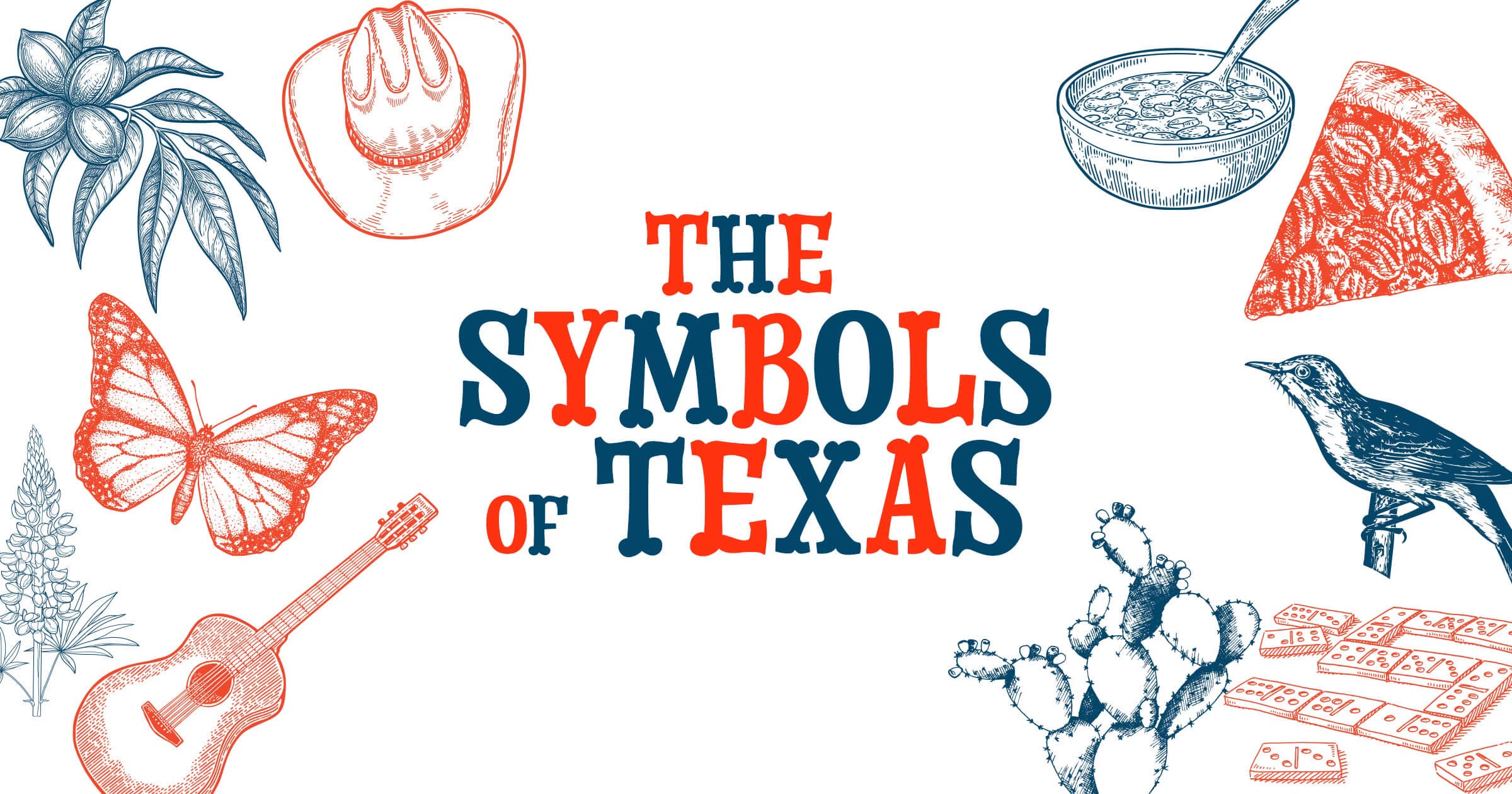
You do that and you’ll start to get the attitude of a true Texan. Congratulations. But to achieve authentic Texcellence there’s a few things you must tuck into your buckled belt, beginning with the state symbols. Since we do everything bigger in Texas, there’s a passel of them to master.
State Air Force: The Commemorative Air Force (formerly known as the Confederate Air Force), based in Dallas at Dallas Executive Airport, was proclaimed the sate air force of Texas by the 71st Legislature in 1989.
State Amphibian: The Texas toad was named the state amphibian by the 81st Legislature in 2009.
State Aquarium: The Texas State Aquarium in Corpus Christi was designated the state aquarium of Texas by the 69th Legislature in 1985.
State Bird: The mockingbird (Mimus Polyglottos) is the state bird of Texas, adopted by the 40th Legislature of 1927 at the request of the Texas Federation of Women’s Clubs. (No one has ever said that our legislators are the sharpest Bowie knives in the sheath. This is an example of how dull that are. The state bird should be the roadrunner.)
State Bison Herd: The bison herd at Caprock Canyons State Park was named the official Texas State Bison Herd by the 82nd Legislature in 2011.
State Bluebonnet City: The city of Ennis in Ellis County was designated the state bluebonnet city by the 75th Legislature in 1997.
State Bluebonnet Festival: The Chappell Hill Bluebonnet Festival, held in April, was named state bluebonnet festival by the 75th Legislature in 1997.
State Bluebonnet Trail: The city of Ennis was proclaimed the official state bluebonnet trail by the 75th Legislature in 1997.
State Botanical Garden: The Lady Bird Johnson Wildflower Center, in southwest Austin, was named the State Botanic Garden and Arboretum by the 85th Legislature in 2017. Encompassing 279 acres, it is the largest all-native garden in the state and features more than 800 native plant species.
State Bread: Pan de campo, translated “camp bread” and often called cowboy bread, was named the state bread by the 79th Legislature in 2005. It is a simple baking-powder bread that was a staple of early Texans and often baked in a Dutch oven.
State Cobbler: Peach cobbler was designated the official state cobbler by the 83rd Legislature in 2013.
State Cooking Implement: The cast iron Dutch oven was named the cooking implement of Texas by the 79th Legislature in 2005.
State Crustacean: Texas Gulf Shrimp was designated the state crustacean by the 84th Legislature in 2015.
State Dinosaur: Paluxysaurus Jonesi was proclaimed the state dinosaur by the 81st Legislature in 2009, after it was discovered that the previous state dinosaur, the Brachiosaur Sauropod, Pleurocoelus, (75th Legislature in 1997) had been a misidentification.
State Dish: Chili was proclaimed the Texas state dish by the 65th Legislature in 1977. (Because it never occurred to the legislators in 1977 that anyone would be so foolish to flaunt their fallen and depraved nature as to suggest that authentic Texas chili should have beans failed to include that prohibition in their declaration. But rest assured, true Texas chili does not include beans. There’s a reason why its called chili con carne and not chili con carne y frijoles.)
State Dog Breed: The Blue Lacy was designated the state dog breed by the 79th Legislature in 2005. The Blue Lacy is a herding and hunting breed descended from greyhound, scent-hound, and coyote stock and developed by the Lacy brothers, who left Kentucky and settled near Marble Falls in 1858.
State Domino Game: The game of 42 was named the state domino game by the 82nd Legislature in 2011.
State Epic Poem: “The Legend of Old Stone Ranch,” written by John Worth Cloud, was named the epic poem of Texas by the 61st Legislature in 1969. The work is a 400-page history of the Albany–Fort Griffin area written in verse form.
State Fiber and Fabric: Cotton was designated the state fiber and fabric by the 75th Legislature in 1997.
State Fish: The Guadalupe bass, a member of the genus Micropterus within the sunfish family, was named the state fish of Texas by the 71st Legislature in 1989. It is one of a group of fish collectively known as black bass.
State Flower: The state flower of Texas is the bluebonnet, also sometimes called buffalo clover, wolf flower and el conejo (the rabbit). The bluebonnet was adopted as the state flower, at the request of the Society of Colonial Dames in Texas, by the 27th Legislature in 1901. The original resolution designated Lupinus Subcarnosus as the state flower, but a resolution by the 62nd Legislature in 1971 provided legal status as the state flower of Texas for “Lupinus Texensis and any other variety of bluebonnet.”
State Flower Song: “Bluebonnets,” written by Julia D. Booth and Lora C. Crockett, was named the state flower song by the 43rd Legislature in 1933.
State Folk Dance: The square dance was designated the state folk dance by the 72nd Legislature in 1991. (Here’s another example of where our legislators don’t know their left foot from their right foot. We have a state folk dance but don’t have just a straightforward state dance, which, of course, would and should be the Texas two-step.)
State Footwear: The cowboy boot was named the state footwear by the 80th Legislature in 2007.
State Fruit: The Texas red grapefruit was designated the state fruit by the 73rd Legislature in 1993.
State Gem: Texas blue topaz, the state gem of Texas, is found in the Llano uplift area in Central Texas, especially west to northwest of Mason. It was designated by the 61st Legislature in 1969.
State Gemstone Cut: The Lone Star Cut was named the state gemstone cut by the 65th Legislature in 1977.
State Grass: Sideoats grama (Bouteloua Curtipendula), a native grass found on many different soils, was designated the state grass of Texas by the 62nd Legislature in 1971.
State Handgun: The 1847 Colt Walker pistol was named the state handgun by the 87th Legislature in 2021.
State Hashtags: #Texas (state), #TexasToDo (tourism), and #txlege (legislature) were all proclaimed state hashtags by the 84th Legislature in 2015.
State Hat: The cowboy hat was named the state hat of Texas by the 84th Legislature in 2015.
State Health Nut: The pecan was designated the state nut by the 77th Legislature in 2001.
State Horse: The American Quarter Horse was named the state horse by the 81st Legislature in 2009.
State Insect: The Monarch butterfly (Danaus Plexippus) was designated the state insect by the 74th Legislature in 1995.
State Knife: The Bowie knife was designated the official state knife by the 87th Legislature in 2021.
State Longhorn Herd: The foundation herd of Texas longhorns at Fort Griffin State Park was named the official state longhorn herd by the 61st Legislature in 1969.
State Mammals: The state mammals were all designated by the 74th Legislature in 1995:
Small: The nine-banded armadillo (Dasypus Novemcinctus)
Large: The longhorn (Bos Texanus)
Flying: The Mexican free-tailed bat (Tadarida Brasiliensis)
State Maritime Museum: The Texas Maritime Museum in Rockport was designated the official state maritime museum by the 70th Legislature in 1987.
State Mushroom: The Texas Star Mushroom (Chorioactis Geaster) was recognized as the official state mushroom by the 87th Legislature in 2021.
State Music: Western swing was named the state’s official music by the 82nd Legislature in 2011.
State Musical Instrument: The guitar was named the state musical instrument by the 75th Legislature in 1997.
State Native Pepper: The chiltepin (Capsicum Annuum var. Glabriusculum) was named the native pepper of Texas by the 75th Legislature in 1997.
State Native Shrub: The Texas purple sage (Leucophyllum Frutescens) was designated the state native shrub by the 79th Legislature in 2005.
State Nickname: “The Lone Star State” was designated the state nickname of Texas by the 84th Legislature in 2015.
State Pastries: Both the sopaipilla and strudel were named the state pastries of Texas by the 78th Legislature in 2003.
State Pepper: The jalapeño pepper (Capsicum Annuum) was designated the state pepper by the 74th Legislature in 1995.
State Pie: Pecan pie was named the state pie by the 83rd Legislature in 2013.
State Plant: The prickly pear cactus (Genus Opuntia) was named the state plant by the 74th Legislature in 1995.
State Plays: There are four official state plays that were designated by the 66th Legislature in 1979:
The Lone Star
Texas
Beyond the Sundown
Fandangle
State Pollinator: The Western Honey Bee (Apis Mellifera) was designated the official pollinator of Texas by the 84th Legislature in 2015.
State Precious Metal: Silver was named the state precious metal by the 80th Legislature in 2007.
State Railroad: The Texas State Railroad was designated the state railroad by the 78th Legislature in 2003. It is a steam powered tourist excursion train that runs between the towns of Rusk and Palestine.
State Reptile: The Texas horned lizard (Phrynosoma Cornutum) was named the state reptile by the 73rd Legislature in 1993.
State Rodeo Drill Team: The Ghostriders team based in Canton was named the state rodeo drill team by the 80th Legislature in 2007.
State Saltwater Fish: The red drum (Sciaenops Ocellatus) was designated the state saltwater fish by the 82nd Legislature in 2011.
State Sea Turtle: Kemp’s Ridley sea turtle was designated the state sea turtle by the 83rd Legislature in 2013.
State Seashell: The lightning whelk (Busycon Perversum Pulleyi) was named the official state seashell by the 70th Legislature in 1987. One of the few shells that open on the left side, the lightning whelk is named for its colored stripes. It is found on the Gulf Coast.
State Ship: The battleship USS Texas was designated the state ship by the 74th Legislature in 1995. The USS Texas was launched on May 18, 1912, from Newport News, Virginia, and commissioned on March 12, 1914. In 1919, it became the first U.S. battleship to launch an aircraft, and in 1939 it received the first commercial radar in the U.S. Navy. It participated in both World Wars I and II. In 1940, the Texas was designated flagship of the U.S. Atlantic Fleet. It was decommissioned on April 21, 1948, and is a National Historic Landmark and a National Mechanical Engineering Landmark. It’s moored at Pier 15 on Galveston Island.
State Shrub: The crape myrtle (Lagerstroemia Indica) was designated the official state shrub by the 75th Legislature in 1997.
State Snack: Tortilla chips and salsa was designated the official state snack by the 78th Legislature in 2003 at the request of second-grade students in Mission.
State Sport: Rodeo was named the state sport of Texas by the 75th Legislature in 1997. (Many Texans take umbrage with this designation, claiming that the state sport should be football.)
State Squash: The pumpkin was named the state squash by the 83rd Legislature in 2013.
State Stone: Petrified palmwood, found in Texas principally in eastern counties near the Texas Gulf Coast, was designated the state stone by the 61st Legislature in 1969.
State Tall Ship: The Elissa was named the state tall ship by the 79th Legislature in 2005. The 1877 ship makes its home at the Texas Seaport Museum at the port of Galveston.
State Tartan: The Texas Bluebonnet Tartan was named the official state tartan by the 71st Texas Legislature in 1989.
State 10K: The Texas Roundup 10K was named the official state 10K by the 79th Legislature in 2005 to encourage Texans to exercise and incorporate physical activity into their daily lives.
State Tie: The bolo tie was designated the state tie by the 80th Legislature in 2007.
State Tree: The pecan tree (Carya Illinoinensis) was adopted as the state tree of Texas by the 36th Legislature in 1919. The sentiment that led to its adoption probably grew out of the request of Governor James Stephen Hogg that a pecan tree be planted at his grave.
State Vegetable: The Texas sweet onion was designated the state vegetable by the 75th Legislature in 1997.
State Vehicle: The chuck wagon was named the state vehicle by the 79th Legislature in 2005. Texas rancher Charles Goodnight is credited with inventing the chuck wagon to carry cowboys’ food and supplies on trail drives.
State Waterlily: The Nymphaea Texas Dawn was named the state waterlily by the 82nd Legislature in 2011.
Boyce House, Texas—Loud and Proud (San Antonio: The Naylor Company, 1945), 3.
“Texas State Symbols” and “Other State Symbols,” in Texas Almanac: 2026–2027, 73rd ed. (Austin: Texas Historical Association, 2026), 30–53.
Y’allogy is an 1836 percent purebred, open-range guide to the people, places, and past of the great Lone Star. We speak Texan here. Y’allogy is created by a living, breathing Texan—for Texans and lovers of Texas—and is free of charge. I’d be grateful, however, if you’d consider riding for the brand as a paid subscriber, it helps offset research and writing expenses—and ensures that Y’allogy remains cost free.
You can also show your support by purchasing my novel.
Be brave, live free, y’all.
The Commemorative Air Force (CAF) is currently headquartered at Dallas Executive Airport (KRBD) in Dallas, Texas. The organization was founded in 1957 as the Confederate Air Force at Mercedes, Texas, formally chartered under that name as a non-profit organization in 1961, at what became known as the original "Rebel Field." In 1968, headquarters was moved to a larger facility at the Harlingen, Texas Industrial Airpark. Then in 1991, headquarters was moved to the Midland International Airport, which housed the American Airpower Heritage Museum. While there, by vote in 2001, its name was changed to the Commemorative Air Force. The move to Dallas Executive Airport was initiated in 2014 and completed in 2015 to increase public visibility and accessibility. It currently consists of more than 80 local units with 17 notable wings, squadrons, and airbases, 6 of which are in Texas, and an inventory of over 175 “warbird” aircraft.
So, when it was designated in 1989 by the 71st Texas Legislature as the State Air Force, it was still the Confederate Air Force, headquartered in Harlingen.
I like Mockingbirds. See them almost everyday. Seeing a roadrunner is rare, at least in my part (central) of the state.