

Who is the Lonesome Dove in "Lonesome Dove"?

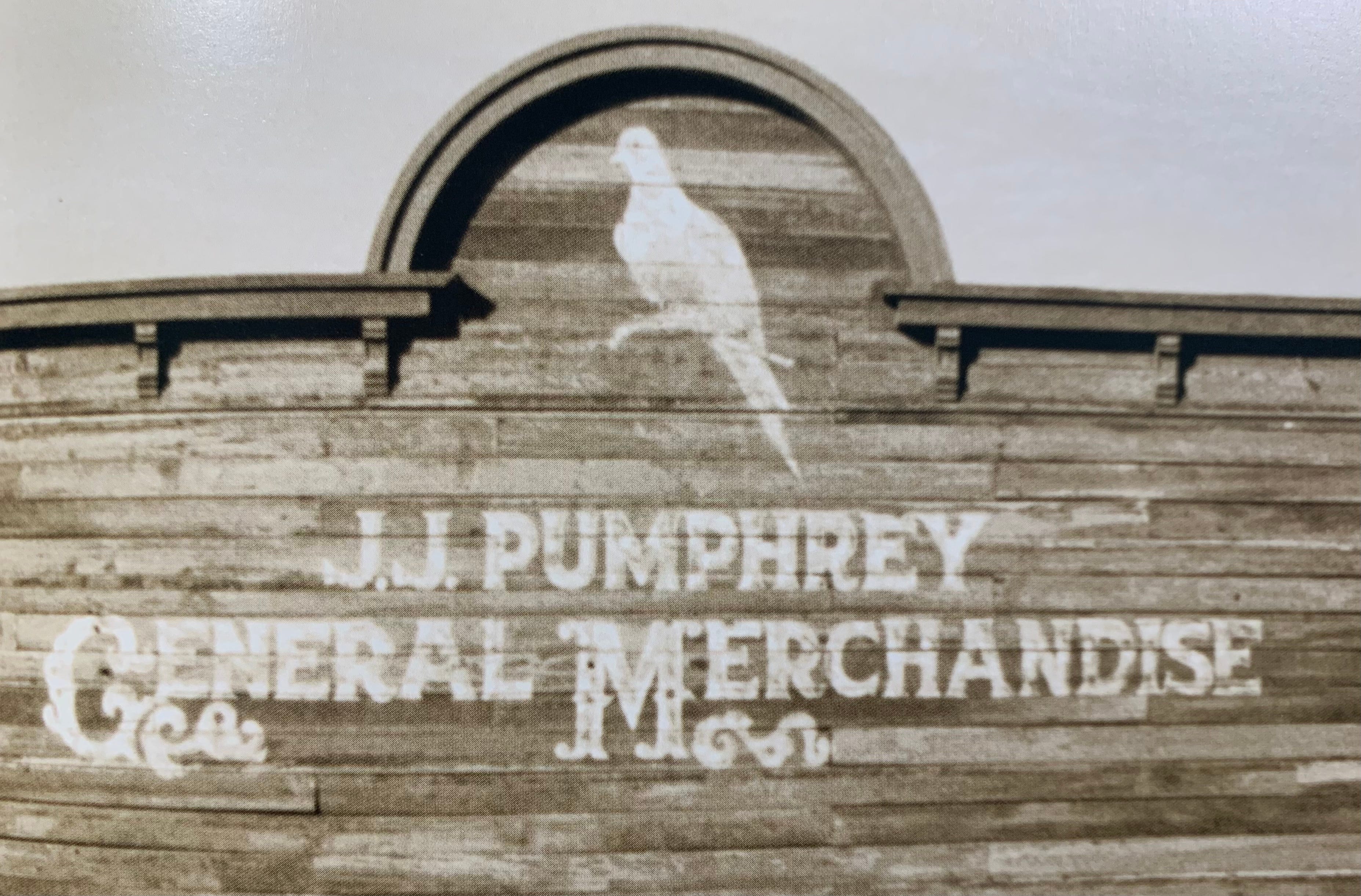
“I ain’t kin to nobody in this world.”
Larry McMurtry
When Larry McMurtry weaved the tapestry that became Lonesome Dove, he used three double threaded relationships to encircle the emotional center of the novel—the scarlet double threaded relationship that runs throughout the narrative. This doesn’t mean McMurtry was conscience of this pattern while writing his novel or that he deliberately intended to create this particular pattern. I’ve read nowhere where he revealed any grand structure for the story other than he purposed to write a journey narrative centered on two aging former Texas Rangers in the hopes of demythologizing the cowboy West. However, if we ask, as readers often do, “Who is the lonesome dove in Lonesome Dove,” such a structure emerges.
It should be pointed out, in the mind of McMurtry, Lonesome Dove represents a place not a person. But I’ve encountered few readers who don’t wonder whether one of the characters metaphorically represents an abandoned bird of peace. I believe one does, whether McMurtry intended it or not, and is revealed in relation to one of the other characters.
There are any number of persona pairings we might uncover in McMurtry’s narrative: Josh Deets and Pea Eye Parker, July Johnson and Elmira Johnson, Roscoe Brown and Janey. Though these characters play a significant role in the story, they are supporting players to the major figures and cannot be our elusive “bird.” This leaves four other pairings, one of which carries the emotional weight of the novel and exposes the true lonesome dove of Lonesome Dove.
✭
Call and Gus. The first double threaded relationship is between Captain Woodrow F. Call and Captain Augustus “Gus” McCrae, the protagonists in the story. It’s easy to conclude that the relationship between the two aging Rangers, who have been at each other’s side for more than forty years, having endured hardships and dangers, is the primary relationship in the story. It certainly dominates the narrative, but for all the emotional power and pull between these two friends, it’s not the emotional center of the novel nor does their relationship lead to the conclusion that either one is the lonesome dove.
✭
Gus and Clara. Next to Gus’s friendship with Call, his most important relationship is with Clara Allen, the woman he has loved since his youth. Though Gus had asked Clara to marry him, on more than one occasion, she refused him. Then she left him to marry a horse trader. She moved to Nebraska where she started a family. Late in the novel, she sums up her relationship with Gus: “He wanted what I wouldn’t give [his freedom to ride off on a whim]. And I wanted what he didn’t have [the desire for a stable home life].” These aren’t the activities or the words of an isolated “bird.”
✭
Jake and Lorena. Though Lorena Wood, the beautiful young whore, and Gus have an intimate and vital relationship, the reader learns nothing particularly important about either one that isn’t revealed through other relationships or the narration. Unlike his stoney partner, Gus is perfectly at ease around women, enjoying their company and conversation, whether in the presence of pure doves like Clara (who could make him uncomfortable, which he finds attractive) and soiled doves like Lorie. We learn through others that Lorie has an unusual power over men like Dish Boggett, the young but experienced cowhand who’s in love with her. But her power to put men ill at ease has no effect on Gus—nor on Jake Spoon, Gus’s and Call’s former compañero, with whom she uncharacteristically becomes attached.
Though Jake has a fierce reputation, he is a possible candidate to fulfill the role of the lonesome dove because he can’t live up to his renown as a gunman and because he is a man who “just kind of drifts” like ash in the wind. In the end, however, Jake become the tragic character in the novel, not the forsaken “bird.”
Many readers view Lorie as the novel’s lonesome dove, after all she ends up in the blistering and dusty South Texas town along the Rio Grande and in her profession by no fault of her. She was the victim of the evil schemes by evil men—Mosby Martin and John Tinkersley. But despite all that, and the novel’s last melancholy paragraph that references her, Lorie fails to serve as a lonesome dove. Though she finds in Gus a customer and a companion, and in Jake a caretaker—so she thinks—she soon discovers what Gus knew all along: Jake was “too leaky a vessel to hold much hope,” especially a young prostitute’s hope of San Fransisco and a life beyond the sexual services she sells. When she arrives at Clara’s house in Nebraska, however, she finds a place to roost—a welcoming and secure home.1
✭
Call and Newt. Regardless of the noteworthiness of the relationships between Call and Gus, Gus and Clara, and Jake and Lorena, the scarlet double threaded relationship woven throughout the narrative is that of Call and Newt Dobbs, the orphaned son of the dead prostitute Maggie. Their relationship centers on whether Call is Newt’s father.2
Before their trek from Texas to Montana, Newt’s primary desire is to become a branded member of the Hat Creek outfit. That happens when Call tells him to saddle his pony and gives him a revolver before riding into Mexico after stolen horses. Once that dream is realized, Newt’s next dream is to become a cowboy and win the respect of Dish, a top hand. The trail drive fulfills the first, the second is fulfilled when Newt prevents the U.S. cavalry scout Dixon from taking Dish’s horse and is quirted for it. Newt also longs to be accepted by Jake as a true friend, which comes to pass just before Jake’s tragic death when he gives Newt his horse. But of all his dreams, Newt’s greatest is to be the son of Woodrow F. Call. “He could remember times when he had daydreamed that the Captain was his father and would take him on long trips.”
After arriving in Montana, Gus said to Newt in a matter-of-fact manner, “Woodrow Call is your pa, son.” The news was perplexing.
Now, in a way, the daydream had come true. The Captain had taken him on a long trip. But instead of feeling proud and happy, he felt down and confused. If it was true, why had everybody been such a long time mentioning it? Deets had never mentioned it. Pea Eye had never mentioned it. Worst of all, his mother had never mentioned it. He had been young when she died, but not too young to remember something so important. He could still remember some of the songs she had sung to him—he could have remembered who his father was. It didn’t make sense, and he rode beside Mr. Gus for several miles, puzzling about it silently. . . .
Much of his life he had wondered who his father was and where he might be. He felt it would be a relief to know. But now he knew, and it wasn’t a relief. There was something in it that thrilled him—he was Captain Call’s son—but more he felt sad.
For the remainder of the journey, and the novel, Newt chews over the information. He says nothing to Call and Call is as silent as a grave. Then comes the emotional climax of the story: Captain Call is on the verge of his return trip to Texas. As I put it in “A Damned Amusing Sign”:
Call puts Newt, now a confident young man, in charge of the ranch and gifts to him his prized horse, the Hell Bitch, his Henry Rifle, and his father’s pocket watch. Call doesn’t give Newt his name, however. Later, when confronted by Clara, she asks Call, “Does [Newt] know he’s your son?” Uncommitted, Call says, “I suppose he does—I give him my horse.” “Your horse but not your name?” “I put more value on the horse,” Call says and turns away.
When Call gave Newt his most valuable possession and rode away, Pea Eye says, “Dern, Newt. He gave you his horse and his gun and that watch. He acts like you’re his kin.
With bitterness in his voice, Newt responds, “No, I ain’t kin to nobody in this world. I don’t want to be. I won’t be”
The last, lonely song sung by the lonesome dove in Lonesome Dove.3
✭
1 Spoiler: In McMurtry’s sequel, Streets of Laredo, Lorena is married to Pea Eye and living back in Texas with their family.
2 Insight: Newt was named after Newt Jones, an Archer County cattleman, the first mail carrier in Indian Territory, and a Texas Ranger acquainted with the McMurtry’s. He had lent $15 to Larry’s brother Charley so he could cowboy in the Panhandle.
3 Spoiler: Newt’s words to Pea Eye after Captain Call rides away are the last we hear from him. In Streets of Laredo, McMurtry writes: “Newt . . . had been killed late in the summer when the Hell Bitch, the mare the Captain gave him, reared and fell back on him. The saddle horn crushed his rib cage, and crushed his heart as well”—the same heart his father crushed earlier in the spring when he rode away.
✭
Larry McMurtry, Lonesome Dove (Simon & Schuster, 1985), 144, 548, 724–5, 726, 801, 805, 809.
Larry McMurtry, Streets of Laredo (Simon & Schuster, 1993), 29–30.
Y’allogy is an 1836 percent purebred, open-range guide to the people, places, and past of the great Lone Star. We speak Texan here. Y’allogy is created by a living, breathing Texan—for Texans and lovers of Texas—and is free of charge. I’d be grateful, however, if you’d consider riding for the brand as a paid subscriber, it helps offset research and writing expenses—and ensures that Y’allogy remains cost free.
You can also show your support by purchasing my novel.
Be brave, live free, y’all