

The Many Titles of "The Streets of Laredo"

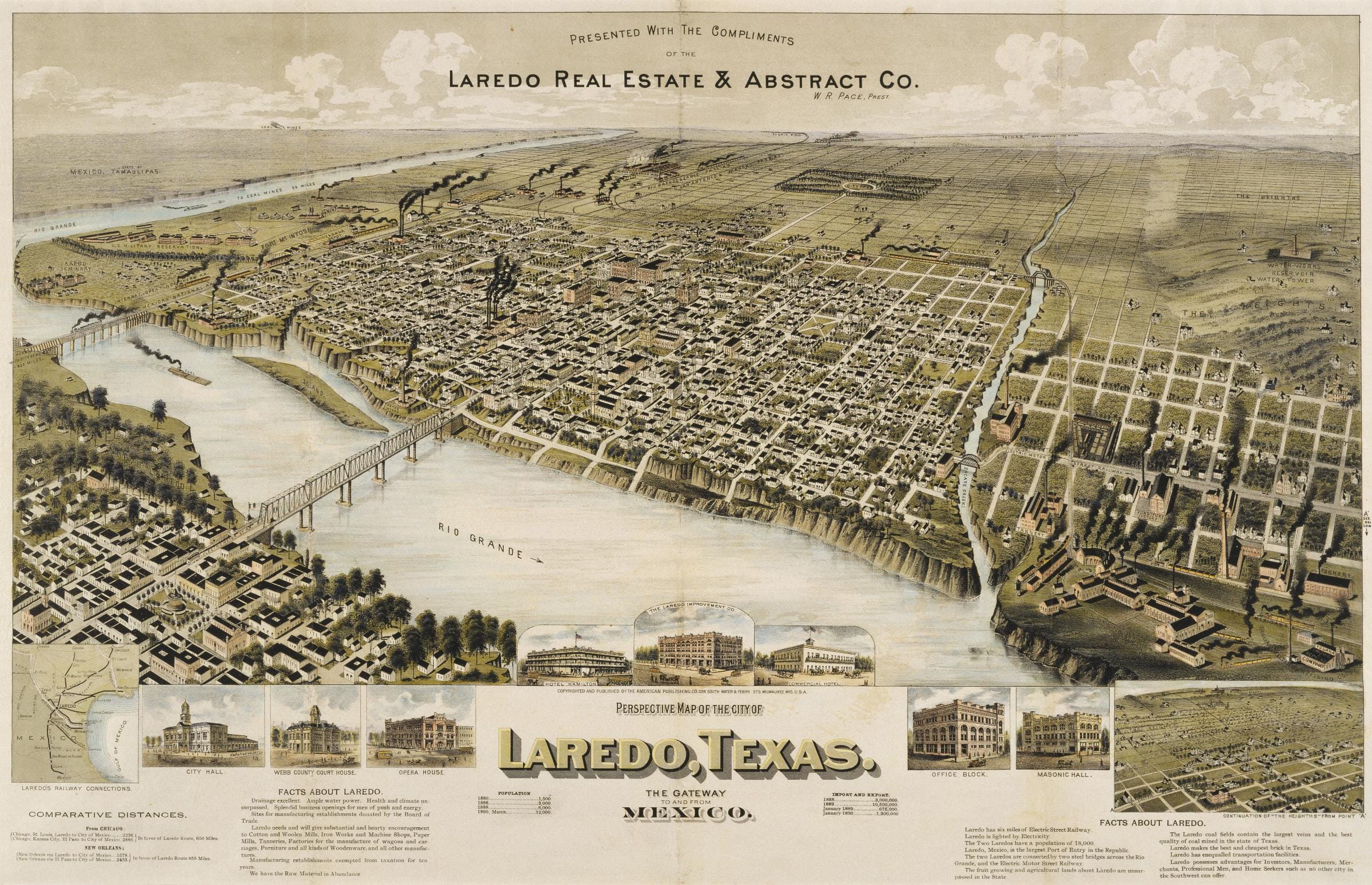
As I walked the streets of Laredo / walked out in Laredo one day / I spied a young cowboy all wrapped in white linen / Wrapped in white linen as cold as the clay.
“The Cowboy’s Lament”
Before the story of Augustus McCrae, Woodrow F. Call, and the Hat Creek boys became a novel it was a 1972 screenplay by Larry McMurtry and Peter Bogdanovich titled “Streets of Laredo.” The film was never made and the script languished in a Hollywood filing cabinet. McMurtry bought back the rights and turned it into his Pulitzer Prize-winning novel Lonesome Dove. Though I’ve written about this in “The Blood of Ambivalence,” the tale of how the novel got its moniker is well-known, at least among those who follow such things. It came about because of a serendipitous encounter. As McMurtry tells it, he couldn’t decide on a title until one evening while dining at Ranchman’s steakhouse in Ponder, Texas, he looked out the window and there it was: a bus painted with “Lonesome Dove Baptist Church” along its side.1
What isn’t generally known, however, even by those who follow such things, is that the original screenplay upon which the novel is based had many titles before the film was abandoned. “The streets of Laredo” is the opening line of “The Cowboy’s Lament,” a bleak ballad about a young puncher shot in the chest on the streets of that South Texas town. He asks his passing compañeros to mourn him dead and bury him with roses.
“Get six jolly cowboys to carry my coffin;
Get six pretty maidens to bear up my pall.
Throw bunches of roses all over my coffin;
Throw roses to deaden the clods as they fall.”
Though the screenplay opens in that Texas border town, it has little to do with Laredo. In the words of McMurtry biographer David Streitfeld, “Larry and Peter were . . . trying to evoke the eponymous cowboy ballad.”
Unfortunately, the 1949 movie starring William Holden by the same title was owned by MCA, which refused to release its rights to the title, forcing McMurtry and Bogdanovich to come up with another title. However, nothing else was as good, as the following ideas prove.
✭
Unable to use “The Streets of Laredo,” McMurtry and Bogdanovich changed the title to “The Brazos,” a river in Texas. If they were going to do that, however, given where the script begins, “The Rio Grande” would have been a better option. They soon scrapped “The Brazos” in favor of the head-scratching title “Angelo,” which fared no better than the river title.
Stymied, McMurtry compiled a list of different ideas in a memo to Bogdanovich, drawing on his knowledge of cowboy ballads and from the themes in the script. McMurtry listed seven potential titles for the film based on cowboy songs:
“Once in the Saddle.” This is another line from the cowboy ballad “The Cowboy’s Lament.”
“I’m Bound to Follow the Longhorn Cow. ” This is the title of a trail driving song. It’s an odd suggestion because the screenplay involves horses, not longhorn cattle.
“My Horses Ain’t Hungry.” This is the opening line of an old Appalachian folk song called “The Wagoner’s Lad.” It’s a better title given the stock the old Texas Rangers steal and herd in the Palo Duro Canyon.
“Bringing in the Sheaves.” This is the title of a favorite hymn sung by cowboys up and down the trail, based on Psalm 126:6 about those sowing in tears and reaping in joy.
“They Say There Will Be a Great Roundup.” This is a line in the trail driving tune “The Cowboy’s Dream,” a favorite of Texas evangelist Abe Mulkey, who used it to urge cowboys to come forward during frontier camp meetings.
“Go Turn My Horses Free.” Like the earlier horse title, this at least relates to the theme of the screenplay. This line comes from “Forty Years a Cowpuncher,” by working cowboy E. C. “Teddy Blue” Abbott in We Pointed Them North: Recollections of a Cowpuncher. McMurtry used it as an epigraph for part 3 of Leaving Cheyenne.
“Take My Saddle from the Wall.” This is a line from another trail driving song: “Good-Bye, Old Paint.” McMurtry used this title for an essay he wrote in 1968. McMurtry said to Bogdanovich: “I’ll give it to you.”
McMurtry listed four thematic titles derived from the script itself:
“The Old Timers.” Like the novel Lonesome Dove, the screenplay centers around three aging ex-Texas Rangers: Woodrow F. Call, Augustus “Gus” McCrae, and Jake Spoon. McMurtry and Bogdanovich had hoped to secure the talents of aging actors John Wayne (Call), Jimmy Stewart (Gus), and Henry Fonda (Jake).
“Los Companyeros.” I think McMurtry meant “Compañeros,” Spanish for companions or partners.
“The Partners.” If Bogdanovich didn’t like the Spanish title, then this simple English one about the three friends and partners in the horse drive might appeal to him.
“Palo Duro.” This a deep cut canyon in the Texas Panhandle (outside of Amarillo) which serves as a major location in the screenplay.
✭
McMurtry’s typed memo lists one last title: “I Hate to Leave You, Kate.” Pinpointing the source of this suggestion stumped me, but I believe it comes from the assassination of Jack O’Neil by John Rucker, when over a gambling dispute, Rucker, from hiding, unloaded a double-barreled shotgun into O’Neil as he walked down a Denver street in 1859. O’Neil’s sweetheart was named Kate. As O’Neil lay dying, he called for her and said, “I hate to leave you, Kate, but I reckon I am all in. The cards were cut wrong and I guess it had to be.”2
✭
1 In a September 30, 1997, lecture at the University of North Texas, McMurtry claimed he saw the Lonesome Dove Baptist Church bus along side the road while driving through Ponder to Fort Worth.
2 Rucker was “tried” in a kangaroo court and acquitted. When the Civil War broke out, he signed on with William Quantrill’s guerrillas, which included the Younger brothers and James brothers, and participated in the bloodletting of the Lawrence (Kanas) Massacre. Rucker was later killed by Tom Anderson, one of his fellow cutthroats.
✭
Larry McMurtry, “A Preliminary Treatment: or, Materials Toward a Movie,” undated memo provided by David Streitfeld to the author via email, May 30, 2026.
David Streitfeld, Western Star: The Life and Legends of Larry McMurtry (Mariner Books, 2026), 232.
Y’allogy is an 1836 percent purebred, open-range guide to the people, places, and past of the great Lone Star. We speak Texan here. Y’allogy is created by a living, breathing Texan—for Texans and lovers of Texas—and is free of charge. I’d be grateful, however, if you’d consider riding for the brand as a paid subscriber, it helps offset research and writing expenses—and ensures that Y’allogy remains cost free.
You can also show your support by purchasing my novel.
Be brave, live free, y’all.
Thanks for sharing this backstory.
The song itself, or rather the melody, is a very old one, documented back to the early 17th Century, as a Royal Navy capstan or pumping shanty - ‘Spanish Ladies’, but there are Irish versions, eg ‘The Bard of Armagh’ and numerous American versions too.
‘I went to a dance last night in old Tomby,
There was plenty of girls there as fine as you wish,
There was one pretty maid there a chewin’ tabaccy,
Jus’ like a young kitten a chewin’ a fish,’
And so on….
LF
When I think of Henry Fonda as Wyatt Earp in "My Darling Clementine", lounging in a chair on the wooden sidewalk outside The Grand Hotel in Tombstone, but springing to attention when pretty young Miss Clementine Carter gets off the midday stagecoach, I can easily see him in the role of Gus McCrae, leaving Jimmy Stewart to play against type as Jake Spoon. I'm looking forward to seeing that original Wayne/Stewart/Fonda version of "Lonesome Dove" when I finally get to that last big roundup in the sky.