

Cowboy Character: Honesty

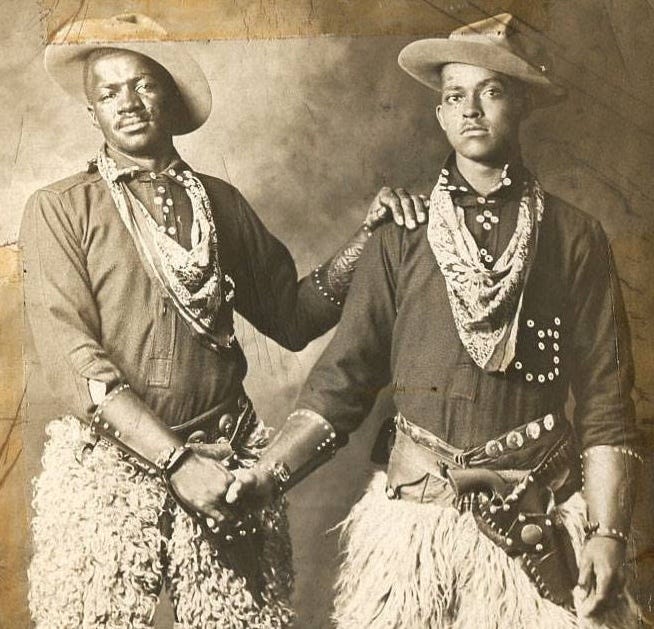
A straightforward, honest person should be like someone who stinks: when you’re in the same room with him, you know it.
Marcus Aurelius
In my grandfather’s hometown he was known as the man in the red fedora, his trademark which graced the work van he used to carry the tools of his trade. He made his living on his hands and knees laying floor covering. His friends called him E. G. or Glenn. His family called him Daddy Jeter. His clients called him Mr. Jeter—and said it with reverence. They knew the cliché about a man’s word being his bond was true of my grandfather. If he gave a client an estimate for a job and later discovered a mistake in his calculation he never billed for the difference. The number he quoted was the number he billed. He ate the shortfall. In the eyes of his clients, the red fedora was a symbol of the man’s character—the quality of his work and the honesty of his word.
He was, as the old saying goes, as honest as the day is long. His word was as good as a signature signed in blood. He embodied the admonition in Matthew 5:37: “Let your ‘Yes’ be ‘Yes,’ and your ‘No,’ ‘No.’”
✭
Though my grandfather wasn’t a cowboy, he had the character of one—especially when it came to honesty. Texas humorist Bix Bender says, “Honesty is not somethin’ you should flirt with. You should be married to it.” My grandfather had a faithful and fruitful marriage to honesty, as did most working cowhands. In the words of cowboy historian Ramon Adams, “There was no such thing as petty thievery” among old-time punchers. They were not camp robbers. “In the old trail days,” Adams writes, “bags of silver and gold lay around camp after a trail drive unnoticed and with never a thought of theft.”
A cowboy might claim a maverick cow, commonly called a “slick ear”—one unbranded, without an ear mark, and alone—but he never rustled another men’s property. If he came upon an unattended branded animal he attempted to ascertain its owner and return the animal. His code of conduct demanded it. And if he was given a loan of a dollar or a horse, he was sure to pay or bring back what was owed. “I’m good for it,” was all a man need say and shake hands on it.
Of course, that wasn’t true of every man on the range. It might be said of a man who violated the code of honesty that “he was as long as a snake and dragged the ground when he walked.” But some men had no code other than penny-ante thievery. When dealing with such men, cowboys made a distinction between the theft of a horse and the theft of a cow. A cow was considered a commodity, a piece of property, and the theft of such was for the courts to decide punishment and restitution. The theft of a horse, however, was another matter. A horse on the plains could make the difference between life and death. Horse thieves were loathsome and despised. To set a man afoot by stealing his horse carried the penalty of death if caught, not by a court of law but by the individual himself or the outfit he worked for.
✭
It’s doubtful many or any cowboys read the Meditations by Roman philosopher-king Marcus Aurelius, but they would heartily agree with his observation: “A straightforward, honest person should be like someone who stinks: when you’re in the same room with him, you know it. . . . If you’re honest and straightforward and mean well, it should show in your eyes. It should be unmistakable.”
✭
Two old ladies were walking around an overcrowded English country churchyard and came upon a tombstone. The inscription read: “Here lies John Smith, a politician and an honest man.”
“Good heavens!” said one lady to the other. “Isn’t it awful that they had to put two people in the same grave!”
That qualifier was unnecessary on the tombstone of my grandfather. It was unnecessary on the tombstone of the average cowboy. All that need be carved was this: “Here lies John Smith, a cowboy.” His honesty was taken for granted.
✭
Bix Bender, A Cowboy’s Guide to Life (Gibbs Smith, 2019), 213.
Ramon F. Adams, The Cowman and His Code of Ethic (The Encino Press, 1969), 8.
Marcus Aurelius, Meditations, 11.15, trans. Gregory Hays, (The Modern Library, 2002).
Y’allogy is an 1836 percent purebred, open-range guide to the people, places, and past of the great Lone Star. We speak Texan here. Y’allogy is created by a living, breathing Texan—for Texans and lovers of Texas—and is free of charge. I’d be grateful, however, if you’d consider riding for the brand as a paid subscriber, it helps offset research and writing expenses—and ensures that Y’allogy remains cost free.
You can also show your support by purchasing my novel.
Be brave, live free, y’all
You've nailed it, Derrick! And thanks for pointing it out for folks.