

A Baker's Dozen of Film & Television Cowboy Hats

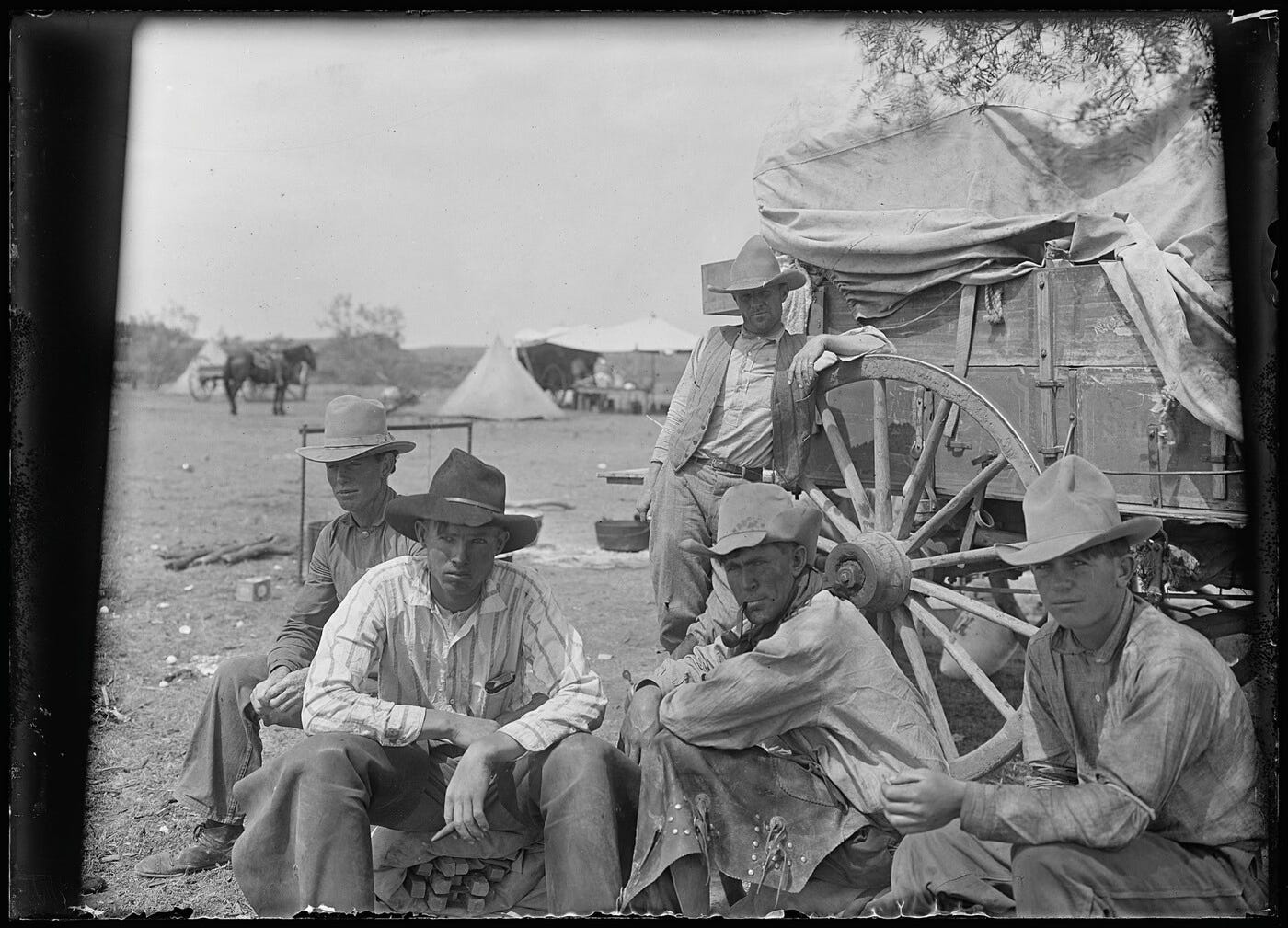
A fine hat fits like a good friend.
Charles M. Russell
One of the most popular pieces published on Y’allogy is on cowboy hats: “Cowboy Etiquette: The Cowboy Hat.” That article is a set of rules on the appropriate ways to handle your hat, when to remove it, and when to wear straw and felt. It was written for “citified folks” who’ve adopted a western wear lifestyle but who might not know proper hat etiquette. If that’s you, I invite you to read that piece—after all, you don’t want to run afoul “in the presence of the real McCoy” by demonstrating that “you only have hair under your hat.”
✭
Those raised on concrete but who want to dress like those raised on dirt typically select a conventional hat style: one with a “Cattleman’s Crease.” It’s a good-looking, modern style, but bears little resemblance to the hats worn by working cowboys in the Old West. During the glory days of trailing cattle, from 1865–1890, cowboys, by and large, wore (or something similar to) Philadelphia milliner John B. Stetson’s “Boss of the Plains”—a wide brimmed, open crowned hat made from beaver felt, first produced in 1865. Before that vaqueros along the Rio Grande and the brush country of South Texas wore sombreros made of animal fur, hemp, or other organic material.
Regardless of what the hat is made of or the shape it takes, old-time cowboys didn’t wear one as a fashion statement. To them, a hat was a practical piece of equipment—a tool to keep the sun off a man’s face and neck and to protect him from rain and hail. When cowboys became celluloid the important thing about the cowboy hat was no longer practicality but projection, creating a compelling image on the screen. This led to film and television hats that looked good, but bore little resemblance to the working man’s headgear.
But this doesn’t mean filmmakers and television productions always get it wrong when representing historically accurate cowboys’ hats on the screen. The following baker’s dozen of movie and television hats are not the most stylish or unsoiled, but they do epitomize some of the most authentic Old West cowboy hats put on film.
✭
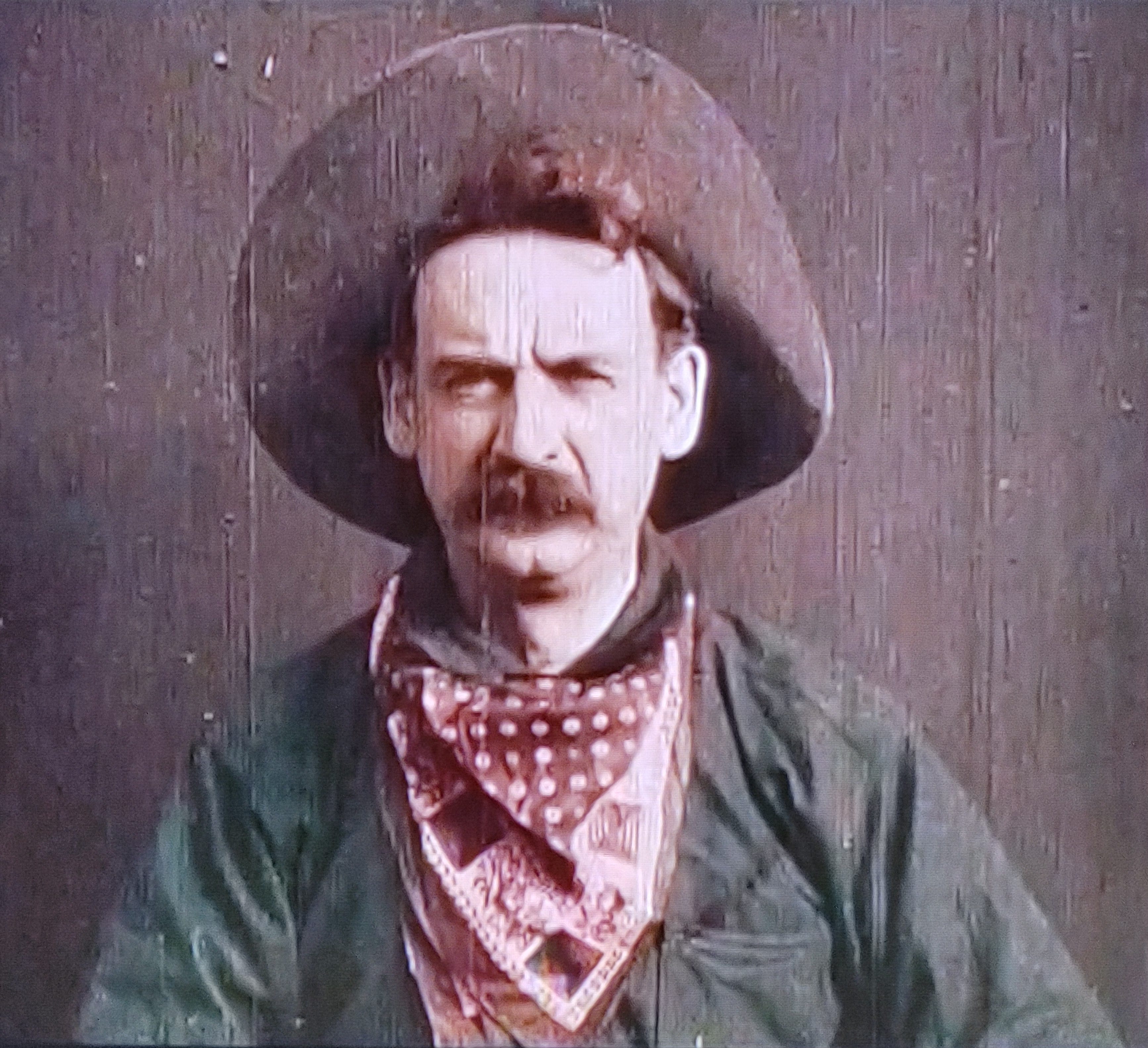
Bandit (Justus D. Barnes) in The Great Train Robbery (1903) wore a historically genuine hat. The front brim is creased up to one side and the hat is pushed back on his head—a common, relaxed way of wearing the hat seen in many old-time photos. Long Hair (Bruce Dern) in The Cowboys (1972) also wore this hat style.
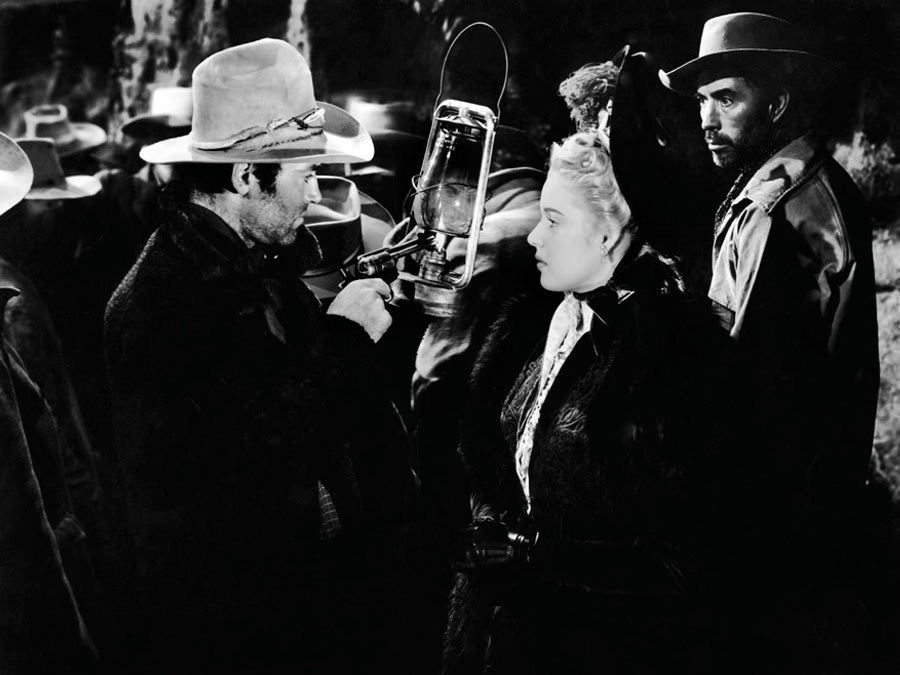
Gil Carter (Henry Fonda) in The Ox-Bow Incident (1943) wore a mashed open crown, where the dents are placed here and there with no discernible rhyme or reason. The curls in the front brim are equally uneven. It’s a hat that looks sweated through and slept in, just like the real thing.
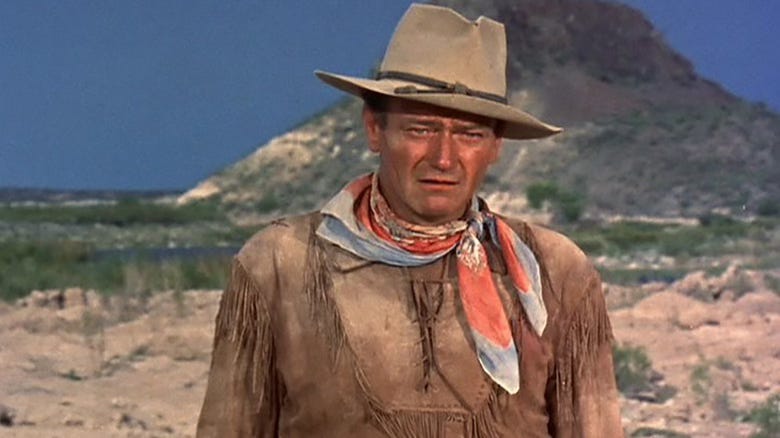
Hondo Lane (John Wayne) in Hondo (1953) wore a period accurate cavalry slouch hat with the front and rear brim curled up and the crown pinched on four sides—a common style among nineteenth century cavalry troopers. This is the same hat Wayne wore in She Wore a Yellow Ribbon (1949).
Festus Haggen (Ken Curtis) in the television series Gunsmoke (1964–1975) wore a sweat stained, tall open-crowned hat. The front brim is curled from where Curtis grabbed it, bearing the marks of genuineness.
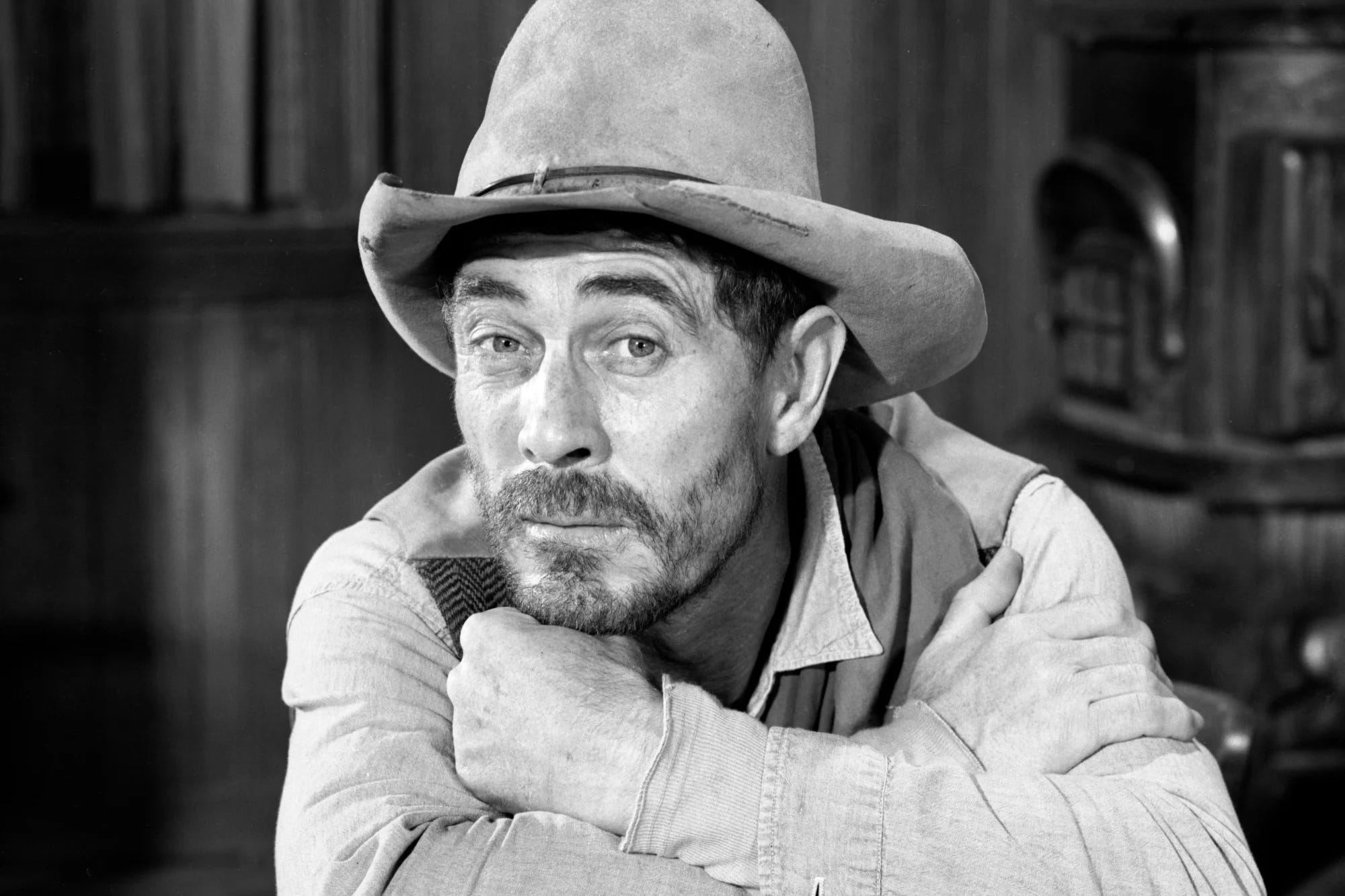
Monte Walsh (Lee Marvin) in Monte Walsh (1970) wore a broad-brimmed hat with the front brim pushed up, a run-of-the-mill brim style for old-timers. The crown is tall but pinched in a sloppy Montana Peak, a crown style common at the time, and rounded with a beaver hatband.
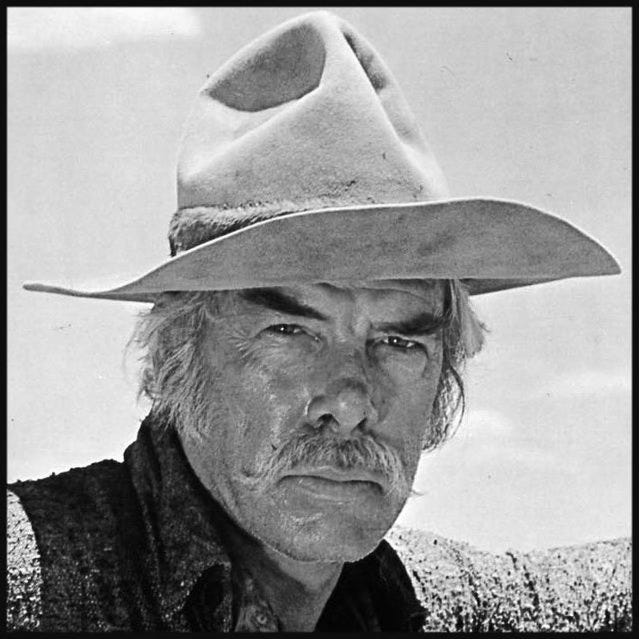
Russ (Geoffrey Lewis) in The Culpepper Cattle Company (1972) wore a modified sombrero. The brim is wide and the crown is roughly flattened with a slight front pinch, typical of South Texas cowboys of the time.
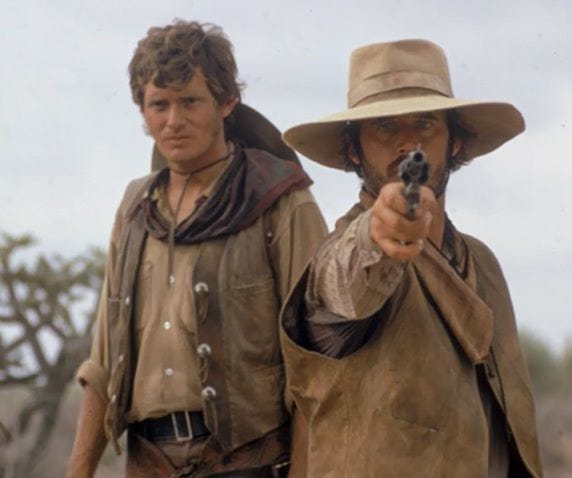
Josey Wales (Clint Eastwood) in The Outlaw Josey Wales (1976) wore a wide, pencil rolled brimmed hat with what is often called a “Gambler’s Crease” (sometimes known as “Telescope Crease”) where the crown is flattened evenly across. Pencil rolled hats were popular in the nineteenth century.
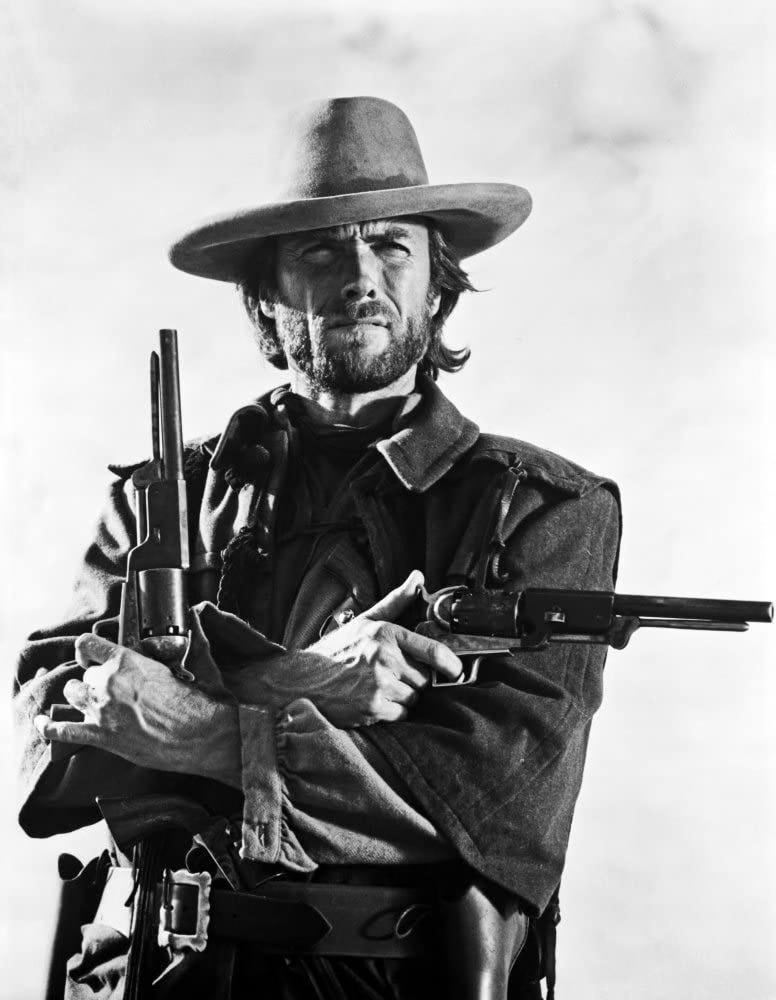
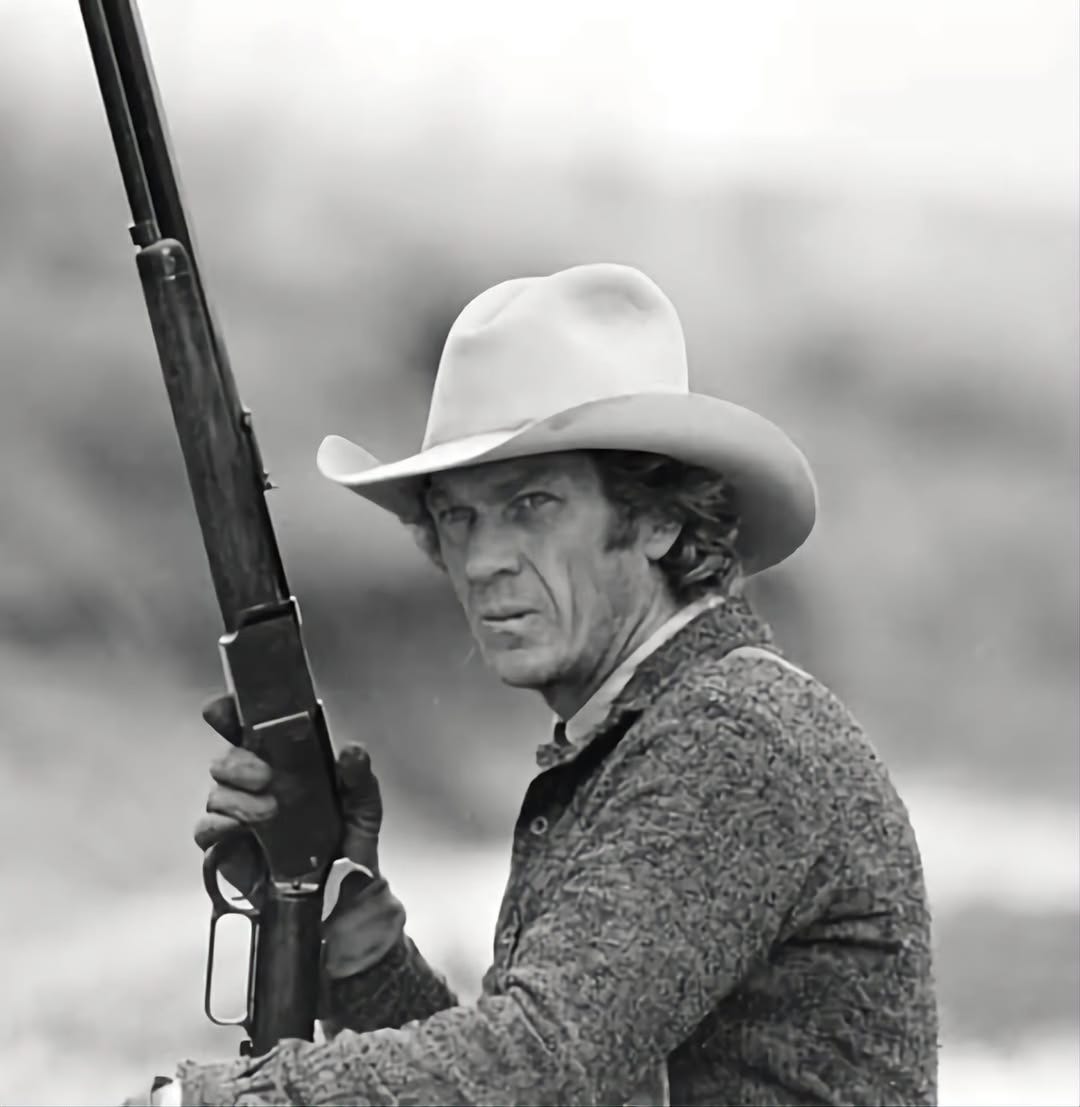
Tom Horn (Steve McQueen) in Tom Horn (1980) wore a hat that is popularly known as the “Gus.” The crown has a deep crease and slopes sharply at the front. The back of the crown is left untouched or opened. The fold of the brim is a little too clean but in keeping with the time period depicted in the film: early 1900s.
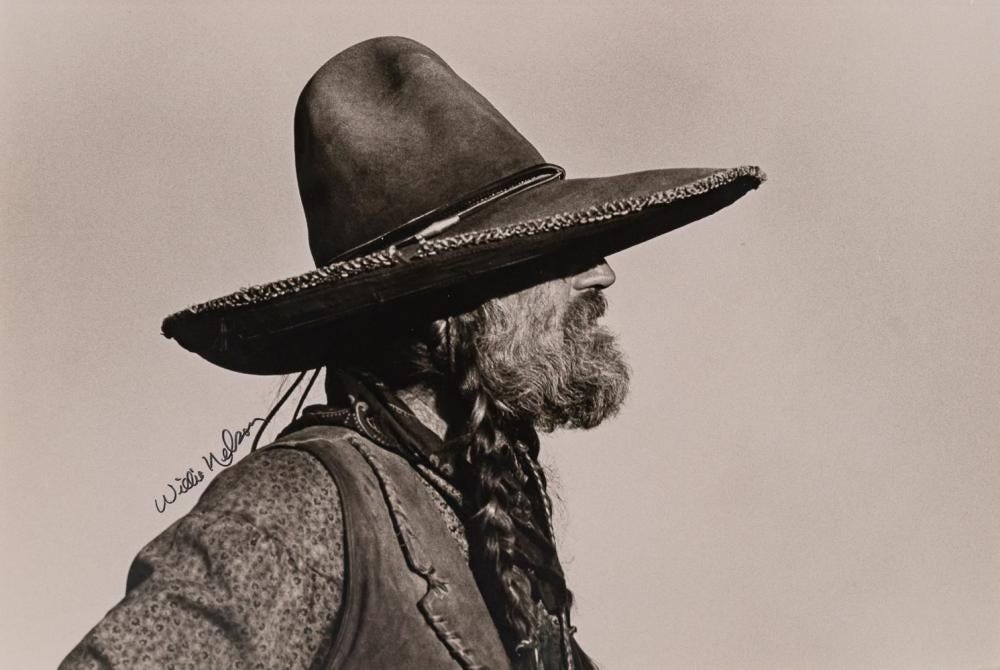
Barbarosa (Wille Nelson) in Barbarosa (1982) wore a wide-brimmed sugarloaf-style sombrero. The back brim is angled upward while the front brim is angled downward. The high-peaked crown is pinched toward the front. Under that hat, Nelson could have passed for a Mexican or Tejano vaquero working cattle in the late 1880s.
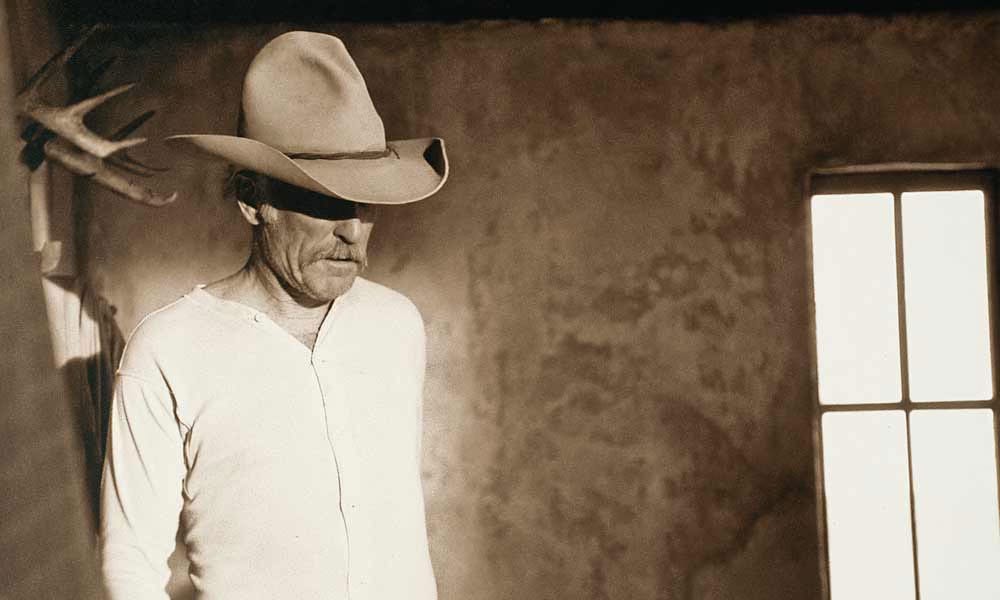
Augustus McCrae (Robert Duvall) in the television miniseries Lonesome Dove (1989) wore the classic “Gus” style hat, with the same sharply sloping front crown as the Tom Horn hat, but the brim isn’t as neatly shaped. Historically, this hat wasn’t period accurate—it’s about thirty or so years too early—yet its hand-grabbed brim and leather wound hatband and patina is quintessential cowboy. Besides, how could I not include it?
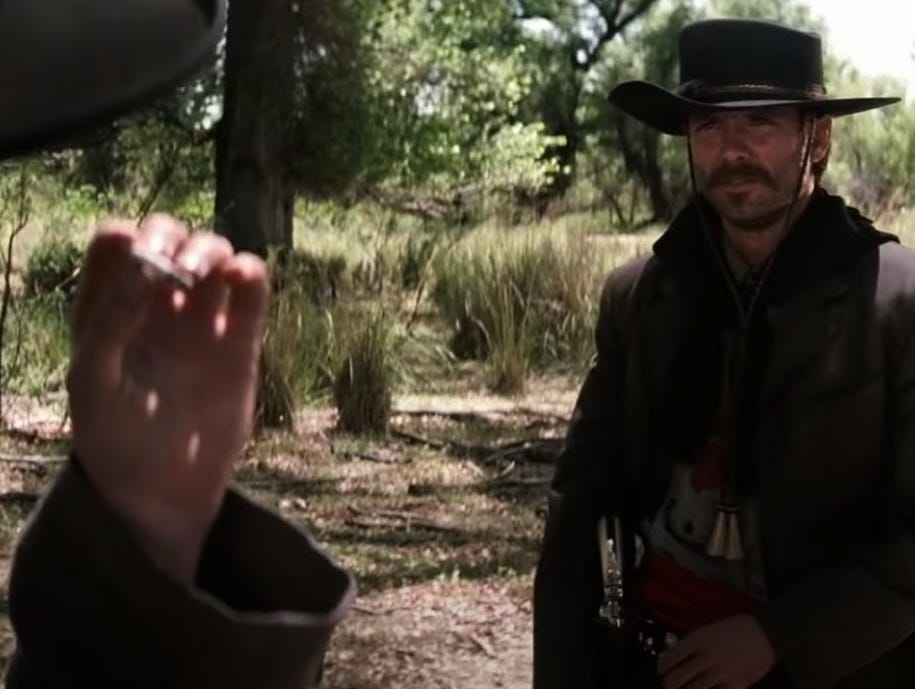
Johnny Ringo (Michael Biehn) in Tombstone (1993) wore a black felt, wide-brimmed hat where the front quarter is curled and the ribboned crown is crushed to one side. It’s embellished with a black leather stampede string. Next to the Bandit’s hat in The Great Train Robbery, this hat is the most iconically authentic hat worn by working cowboys in the Old West.
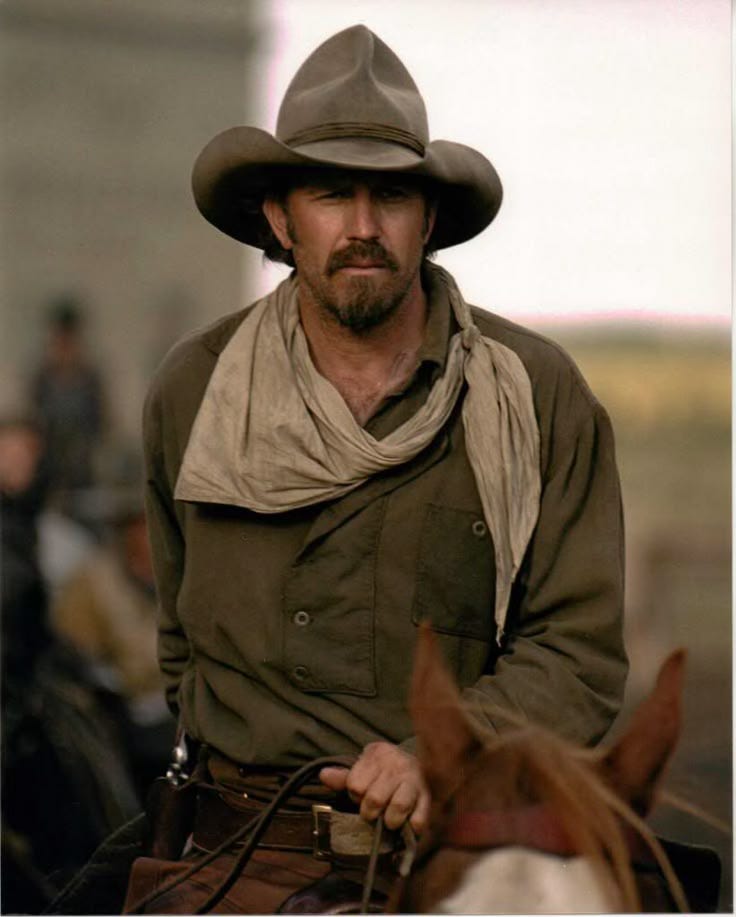
Charley Waite (Kevin Costner) in Open Range (2003) wore a wide-brimmed hat with uneven folds where Costner grabbed it. It has a high, front pinched crown and, with the exception of Gil Carter’s and Festus Haggen’s hats, it’s the most lived-in looking hat on the list, taking on a weathered patina every working cowboy’s hat developed after months in the open.
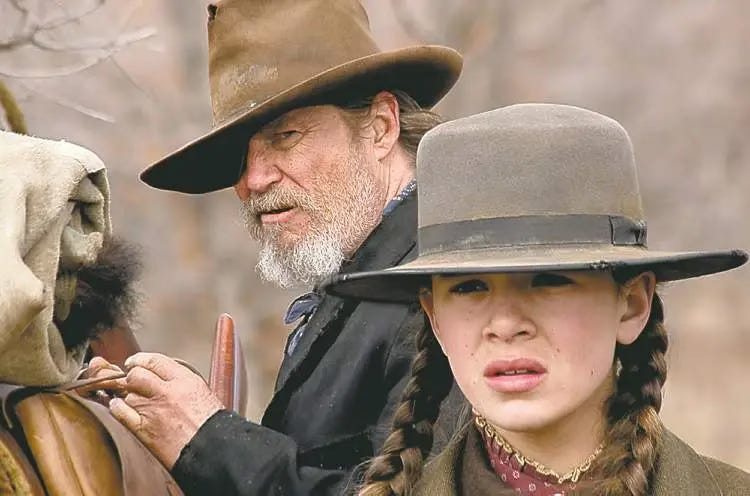
Mattie Ross (Hailee Steinfeld) in True Grit (2010) wore a classic “Boss of the Plains” hat—low open crown and flat wide brim adorned with a simple gray ribbon. Hard to get more real than that.
✭
Any one of these hats would have been welcomed and common on the trail during the heyday of cattle herding. But they aren’t the only movie and television cowboy hats that had a bona fide look. What hats would you add to the list?
Y’allogy is an 1836 percent purebred, open-range guide to the people, places, and past of the great Lone Star. We speak Texan here. Y’allogy is created by a living, breathing Texan—for Texans and lovers of Texas—and is free of charge. I’d be grateful, however, if you’d consider riding for the brand as a paid subscriber, it helps offset research and writing expenses—and ensures that Y’allogy remains cost free.
You can also show your support by purchasing my novel.
Be brave, live free, y’all.
As I learned many, many years ago, my hat needs to keep the sun off my face and the rain from running down my neck.
Great article on cowboy hats, Derrick! 👍 I'm not a real hat guy, having just a felt, Smokey Bear hat that's more decor than worn. My son says a modern cowboy hat lowers one's IQ by 15 points just by putting it on. 😁He may be too critical I'm thinking. But I wouldn't mind having one of those "Gus" hats these days!